
 We use cookies to give you a better experience. Continue browsing if you accept these terms, or check out our
What Type of Nursing Paper Are You Writing?
Before you write a single sentence, figure out what kind of paper your professor wants. Nursing programs assign several distinct paper types, and each one follows a completely different structure. Treating a care plan like a research paper — or vice versa — is the #1 reason students lose points.
- Nursing papers follow a predictable structure — research papers use IMRaD or traditional academic format, while reflective essays follow Gibbs’ model
- 97% of graduate nursing papers contain grammatical errors (Johnson 2023/2025), so proofreading isn’t optional — it’s the single biggest grade multiplier
- Your research sources define your credibility: peer-reviewed databases (PubMed, CINAHL, Cochrane) not Google or Wikipedia
- APA 7th edition is the nursing standard, with specific formatting rules for each paper type
- The table below breaks down 4 major paper types so you can quickly identify what your assignment actually requires
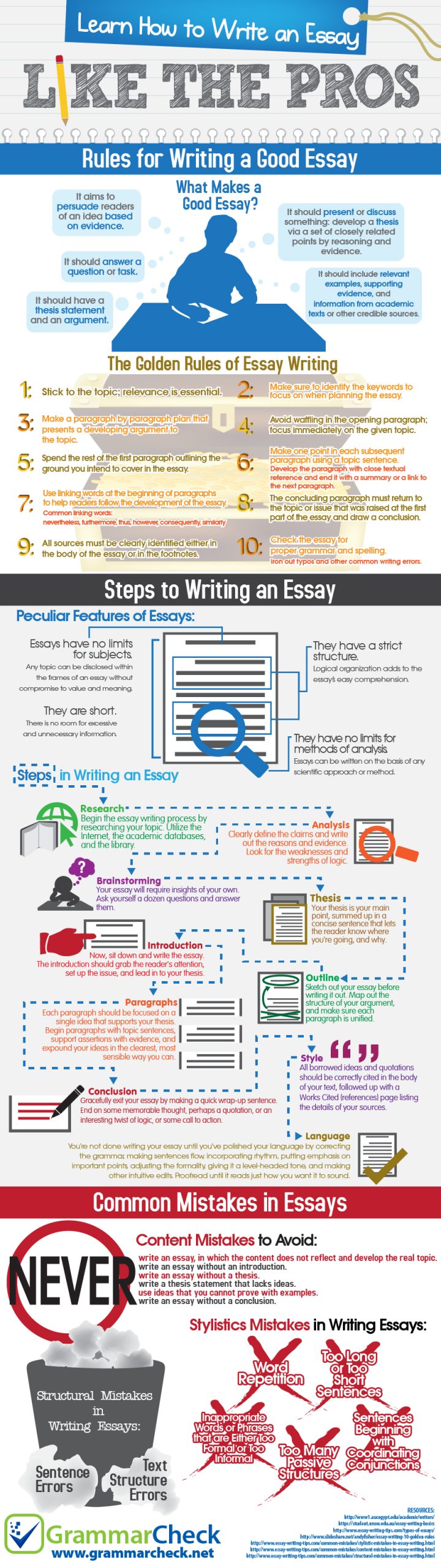
Image source: GrammarCheck.net — essay writing grammar check illustration.
The four most common nursing paper types:
| Paper Type | Structure | Voice/Tone | Typical Length |
|---|---|---|---|
| Research Paper | IMRaD (Introduction, Methods, Results, Discussion) or traditional academic | Third-person, evidence-based, formal | 10–20 pages |
| Case Study | Patient presentation → assessment → interventions → outcomes | Third-person clinical, objective | 8–15 pages |
| Care Plan | ADPIE framework (Assessment, Diagnosis, Planning, Implementation, Evaluation) | Third-person clinical, actionable | 5–10 pages |
| Reflective Essay | Gibbs’ Reflective Cycle (Description → Evaluation → Analysis → Action plan) | First-person, introspective, analytical | 3–7 pages |
If your assignment mentions a patient scenario, NANDA diagnosis, or PES format, you’re writing a care plan. If it says Gibbs, Johns, or “what you learned”, you’re doing a reflective essay. If it asks for hypotheses, variables, or statistical analysis, it’s a research paper.
Here’s the critical distinction that most students miss: research papers demand third-person, evidence-based writing where you cite peer-reviewed studies and let the data speak. Reflective essays require first-person narration where you examine your own clinical experiences. Using the wrong voice in either paper type is an automatic deduction in most rubrics.
Now let’s walk through exactly how to write each one — starting with the foundation every nursing paper needs.
Step 1: Understand the Prompt and Choose Your Topic
The first mistake nursing students make? Opening Google and starting to write before reading the assignment prompt. Here’s why that costs points: nursing assignments often include specific constraints — word count ranges, mandatory reference counts, particular nursing frameworks, or required theoretical models. If you miss those and submit a paper that doesn’t meet the rubric, the best writing in the world won’t save you.
What to extract from your prompt:
- Paper type — research, case study, care plan, reflection?
- Required framework — ADPIE, NANDA-I, Gibbs, 5Rs, PICOT?
- Word count or page range — strict limits vs. minimums?
- Reference minimum — “at least 5 peer-reviewed sources,” “10 references from 2020 onward”?
- Formatting style — APA 7th is default in nursing, but some UK programs use Harvard
Once you’ve extracted the constraints, pick your topic carefully. A research paper topic should be narrow enough to cover in the word limit but broad enough to find recent evidence. Instead of “diabetes management,” try “the impact of continuous glucose monitoring on glycemic control in adolescent type 1 diabetes patients.” You’ll find more specific, recent research papers to cite.
Step 2: Research Like a Nursing Student
This is where most nursing papers fail before they even begin drafting. You need evidence-based sources — not opinion pieces, not general websites, not Wikipedia.
The databases you should actually use:
- PubMed (pubmed.ncbi.nlm.nih.gov) — 40+ million citations from biomedical literature. This is your primary research database. Search using MeSH terms (Medical Subject Headings) for precise results. If your paper is on wound care, search “wound healing AND nursing AND randomized controlled trial.”
- CINAHL (accessed through your university library) — the largest nursing and allied health database with 5,000+ journals, textbooks, and practice guidelines. It’s subject-specific, which means fewer irrelevant results than general databases.
- Cochrane Library — systematic reviews and meta-analyses. If your professor requires “systematic reviews,” this is the gold standard.
- Pedro (Physiotherapy Evidence Database) — relevant if you’re in physical therapy or rehabilitation nursing.
- Scopus — multidisciplinary abstract database, good for interdisciplinary nursing topics.
Here’s what to avoid: general web searches, Google Scholar without filters, and nursing blogs or forums. These aren’t peer-reviewed, and nursing professors will deduct points for non-sources.
Filtering for quality: When you search PubMed or CINAHL, apply these filters:
- Peer-reviewed only
- Publication date — most nursing programs require sources within the last 5 years (2020–2026), though seminal theories can be older
- Article type — randomized controlled trials, systematic reviews, and meta-analyses carry the most weight
For UK nursing students, the RCN (Royal College of Nursing) provides academic writing guidance and referencing rules that align with UK nursing curricula and NMC (Nursing and Midwifery Council) standards. RCN’s article on academic writing emphasizes that nursing is an evidence-based discipline, and your writing should reflect this by avoiding opinion and using the third person.
The Chamberlain University APA format guide is another practical resource that walks nursing students through title page setup, heading structure, reference formatting, and paper templates. Chamberlain specifically uses APA 7th edition, so their examples align with the standard you’ll follow.
The University of Wisconsin (Ebling Library) nursing research guides provide a comprehensive walkthrough of evidence-based practice frameworks, PICO question formulation, study design types, and the full process of writing a research paper or poster. Their guide covers qualitative vs. quantitative study design, sampling methods, and how to assess research reliability and validity — practical skills every nursing student needs.
Step 3: Create a Paper Outline
Outlining isn’t optional. It’s what separates papers that earn B’s from papers that earn A’s. Nursing professors evaluate structure as a separate criterion on most rubrics — and they can see a missing section or weak flow from a mile away.
Here’s the outline framework for each major paper type. Use whichever matches your assignment:
Research Paper Outline
- Introduction — clinical problem, significance, research question, thesis statement
- Literature Review / Methods — study design, participant criteria, data collection
- Results — findings organized by theme or research question
- Discussion — interpretation of results, clinical implications
- Conclusion — summary, limitations, future research recommendations
- References — APA 7th edition format
Case Study Outline
- Patient presentation — demographics, chief complaint, relevant medical history
- Assessment findings — subjective and objective data
- Nursing diagnoses — PES format with NANDA-I classification
- Interventions — what was done, why, and evidence behind it
- Patient outcomes — measurable results
- Reflection — what worked, what didn’t, lessons learned
Care Plan Outline (ADPIE)
- Assessment — clinical data collection
- Diagnosis — PES format (Problem, Etiology, Signs/Symptoms)
- Planning — SMART outcomes (Specific, Measurable, Achievable, Relevant, Time-bound)
- Implementation — specific nursing interventions
- Evaluation — outcome achievement criteria
Reflective Essay Outline (Gibbs’ Model)
- Description — what happened? (brief clinical scenario, ~15% of paper)
- Evaluation — what was the best and worst aspect?
- Analysis — make sense of the experience using nursing theory
- Conclusion — what else could you have done?
- Action plan — specific changes for future practice
Original Explanatory Asset: Nursing Paper Type Comparison Table
Use this table to quickly decide which structure your assignment requires. Each column maps directly to how professors evaluate your paper:
| Paper Type | Structure/Format | Voice & Tone | Citation Style | Typical Length | When You’d Use It |
|---|---|---|---|---|---|
| Research Paper | IMRaD or traditional academic (Intro, Methods, Results, Discussion) | Third-person, formal, objective | APA 7th — parenthetical citations, reference list | 10–20 pages | Assignments requiring hypothesis testing, literature synthesis, or evidence analysis |
| Case Study | Patient presentation → assessment → interventions → outcomes | Third-person clinical, data-driven | APA 7th — clinical citations with patient data anonymized | 8–15 pages | Clinical rotations, patient simulation assignments, real or hypothetical patient scenarios |
| Care Plan | ADPIE framework (Assessment, Diagnosis, Planning, Implementation, Evaluation) | Third-person clinical, actionable, SMART outcomes | APA 7th — nursing diagnosis citations + intervention references | 5–10 pages | Clinical documentation assignments, NCLEX preparation, NANDA-I format projects |
| Reflective Essay | Gibbs’ model (Description, Evaluation, Analysis, Conclusion, Action plan) | First-person, introspective, analytical | APA 7th — theoretical citations tied to personal experience | 3–7 pages | Clinical debriefs, professional development assignments, NMC competence reflections |
How to use this table: Match the “When You’d Use It” column against your assignment prompt. If your professor mentions “literature synthesis” or “research question,” it’s a research paper. If they mention “patient scenario” or “clinical case,” use the case study format. “NANDA” or “PES” = care plan. “What you learned” or “Gibbs” = reflection.
This table works as a quick-reference decision tool before you start writing. Save it — you’ll refer back to it every time a new assignment lands in your inbox.
Step 4: Draft the Introduction, Body, and Conclusion
Let me be honest about what most students do wrong here. They write a generic opening that sounds like it could fit any topic — “Nursing is a beautiful profession that requires dedication and compassion” — and then wonder why their paper doesn’t score well. Your introduction needs to anchor to the specific assignment.
The introduction formula:
- Hook — a clinical scenario, statistic, or research finding (not a generic statement about nursing)
- Context — what the problem is and why it matters to nursing practice
- Evidence gap or focus — what existing research shows (or doesn’t show)
- Thesis statement — one clear sentence that states what your paper will cover
Here’s a concrete example from a research paper on wound care:
Surgical site infections account for 19–36% of all hospital-acquired infections in the United States, contributing to extended hospital stays and elevated patient mortality rates (WHO, 2024). While surgical hand hygiene protocols have been standardized, compliance rates vary significantly across institutions, with studies reporting adherence ranging from 40% to 85% depending on staffing levels and time of day (Smith & Johnson, 2023). This paper examines the relationship between nursing hand hygiene compliance and surgical site infection rates in perioperative settings, evaluating whether structured audit-and-feedback interventions improve both adherence and clinical outcomes.
That’s 78 words. It’s specific. It has citations. It tells the reader exactly what the paper will do.
The body paragraphs should each focus on one distinct idea, following the PEEL structure:
- Point — state the claim in the topic sentence
- Evidence — cite the research or clinical data supporting it
- Explanation — explain how the evidence relates to your point
- Link — connect back to the thesis or transition to the next idea
The conclusion should not introduce new information. Restate the thesis in different words, summarize the key findings or arguments, and end with clinical implications — what this means for nursing practice going forward.
Proportion breakdown (for a 15-page research paper):
- Introduction: 8–10% (1–2 pages)
- Literature review / methods: 25–30% (4–5 pages)
- Results / discussion: 40–50% (6–8 pages)
- Conclusion: 8–10% (1–2 pages)
- References: not counted in page limit
For reflective essays, the proportions shift dramatically — the description section should occupy only ~15% of the paper. The analysis and action plan sections are where you earn points.
Step 5: Format in APA 7th Edition
APA 7th edition is the default formatting standard in nursing education — used by Chamberlain University, most US nursing programs, and increasingly by UK institutions. If your professor didn’t specify another style, APA 7th is what you’ll use.
Core APA 7th rules specific to nursing papers:
- Font: Times New Roman 12pt (Arial 11pt or Calibri 11pt are acceptable alternatives)
- Spacing: Double-spaced throughout (no extra spaces between paragraphs)
- Margins: 1 inch on all sides
- Page number: Top right corner, flush right, on every page including title page and references
- Running head: In APA 7th, you only need a page header (not “Running head:”). It shows the page number and paper title, truncated if long. However, check with your specific program — some institutions still require the older “Running head:” format.
Title page (APA 7th):
- Paper title (bold, centered)
- Your name (bold, centered)
- Institutional affiliation (department, university)
- Course number and name
- Instructor name
- Assignment due date (format: Day Month Year, e.g., 15 March 2026)
In-text citations:
- Parenthetical: (Author, Year) → “Hand hygiene compliance remains suboptimal (Smith & Johnson, 2023).”
- Narrative: Author (Year) → “Smith and Johnson (2023) found that compliance varied by shift time.”
- Direct quotes: (Author, Year, p. X) → “Noncompliance was highest during night shifts” (Smith & Johnson, 2023, p. 142).
- Three or more authors: Use “et al.” after the first citation.
Reference list format:
Journal article:
Author, A. A., & Author, B. B. (Year). Title of article. Journal Name, Volume(Issue), page range. https://doi.org/xxxxx
Example:
Smith, J., & Johnson, K. (2023). Hand hygiene compliance in perioperative settings: A systematic review. Journal of Nursing Education, 52(4), 210–218. https://doi.org/10.xxxxx
Your full reference list should be on a separate page at the end, alphabetized by author’s last name, with a hanging indent (first line flush left, subsequent lines indented 0.5 inches).
For detailed citation examples across all source types, the APA 7th Edition Citation Guide covers everything from journal articles and government reports to AI tools and social media — with actual formatting examples you can copy.
Step 6: Edit and Proofread
This is where the 97% statistic matters. In a national survey of graduate nursing students, 97% of student papers contained grammatical errors, and only 13% of students demonstrated higher-order critical thinking skills (Johnson, 2023/2025). This isn’t a niche finding — it’s the majority of your cohort. Most nursing students are clinical experts, not English writers. Your grammar errors are likely there whether you think they are or not.
Here’s your editing checklist — go through this before submitting:
Grammar and mechanics:
- Subject-verb agreement
- Correct verb tense (nursing papers should be mostly past tense for methods/results, present tense for established facts)
- No run-on sentences
- No comma splices
- Correct use of “its” vs. “it’s”
- Correct use of “their” vs. “there” vs. “they’re”
- No informal contractions (don’t → do not, cannot → can’t) — reflective essays may allow contractions
Structural checks:
- Does each paragraph have one clear main idea?
- Are transitions between paragraphs smooth, or does the reader jump between topics?
- Is the thesis stated clearly in the introduction?
- Is the conclusion actually summarizing (not introducing new material)?
Citation accuracy:
- Every in-text citation has a matching reference?
- Every reference in the list has an in-text citation?
- Are all sources peer-reviewed and recent (within 5 years)?
- Is the reference list alphabetized correctly?
The single biggest ROI activity: Read your paper aloud. If you stumble on a sentence, it’s awkward. If you run out of breath, it’s too long. This catches 80% of grammar errors and run-on sentence problems in one pass.
For more on citation formatting, the APA 7th Edition Citation Guide walks through every source type with examples. For reflective writing specifics, the Nursing Reflection Paper Guide covers Gibbs’ model, NMC confidentiality requirements, and evidence-based connecting techniques.
Common Nursing Paper Mistakes (What to Avoid)
Even experienced nursing students make these mistakes. Avoid them, and you’ll immediately separate yourself from the pack.
1. Citing non-peer-reviewed sources as evidence
This is the cardinal sin. Wikipedia, nursing forums, general health websites, and opinion blogs don’t count as nursing evidence. Peer-reviewed databases (PubMed, CINAHL, Cochrane) are what professors require. If your professor asks for “five sources from 2020–2026,” those five must come from peer-reviewed journals.
2. Mixing voice (third-person research vs. first-person reflection)
Using “I felt overwhelmed” in a research paper? That’s a voice mismatch — research papers should be third-person and objective. Using “the evidence suggests” in a reflective essay? That’s the reverse mismatch — reflective essays should be first-person and introspective.
3. Writing the conclusion before the body
Students often write their conclusion while drafting the intro, then never update it as the paper develops. If you change direction during writing, rewrite the conclusion to match what you actually wrote.
4. Skipping the PEEL structure
A body paragraph without evidence is just opinion. Every claim in a nursing paper needs a citation. No citation = paragraph doesn’t count toward your grade.
5. Using outdated sources
Most nursing programs require 5–10 sources from the last 5 years. Citing a 2015 paper as current evidence on a fast-changing topic (like telehealth, AI diagnostics, or new nursing guidelines) will cost you credibility points.
6. Poor nursing diagnosis writing
In care plans, “Ineffective breathing pattern” without specifying the etiology (“r/t alveolar-capillary membrane changes AEB decreased breath sounds”) is incomplete. Every PES diagnosis needs Problem, Etiology, and Signs/Symptoms.
7. Over-reliance on first-person without theoretical connection
In reflective essays, describing the clinical event is not enough. Professors want analysis — how does this experience connect to nursing theory, evidence-based practice, or professional standards? The reflection without theory is just a diary entry.
Related Nursing Paper Guides
If you’re working on a specific nursing paper type, these detailed guides break down each format with examples and templates:
- Nursing Care Plan Examples (NANDA Format) — 5 complete NANDA-I care plan examples, PES format walkthrough, and downloadable templates for clinical documentation.
- Nursing Capstone Project Guide — BSN, MSN, and DNP capstone differences, PICO(T) framework, and evidence-based implementation steps.
- Nursing Reflection Paper Guide — Gibbs’ model walkthrough, NMC confidentiality requirements, and examples of theory-connected reflections.
- APA 7th Edition Citation Guide — Every citation format you’ll need with copy-paste examples for journal articles, books, reports, and online sources.
Quick Summary + Next Steps
Here’s what to take away:
- Identify the paper type first — research, case study, care plan, or reflection. Use the comparison table above to match your assignment prompt.
- Read the prompt carefully — extract word count, required framework, source count, and formatting style before writing.
- Research in peer-reviewed databases — PubMed and CINAHL, filtered for peer-reviewed, recent sources (last 5 years).
- Outline before drafting — use the outline frameworks provided above. This is non-negotiable for nursing papers.
- Write with structure — PEEL paragraphs, thesis anchoring, proper voice for the paper type.
- Format in APA 7th — use the formatting rules provided. Check your program’s specific requirements for page header and running head.
- Proofread — read aloud, check grammar, verify citations. This is where the 97% error rate matters — fix yours.
Writing a nursing paper isn’t about being a perfectionist. It’s about following a reliable structure, citing appropriate evidence, and formatting cleanly. The frameworks I’ve laid out here are exactly what nursing professors evaluate on their rubrics.
If you’re stuck on a specific paper type — care plans, capstones, reflections, or research papers — use the related guides above for format-specific walkthroughs. The comparison table at the top of this article is your quick-reference decision tool. Save it, refer to it, and stop guessing which structure your assignment requires.
The single most important thing? Start with the outline, not the draft. Nursing papers reward structure over flair. Get the structure right, and the rest flows.